
Creative Sports Coloring Activities Kids Can Try
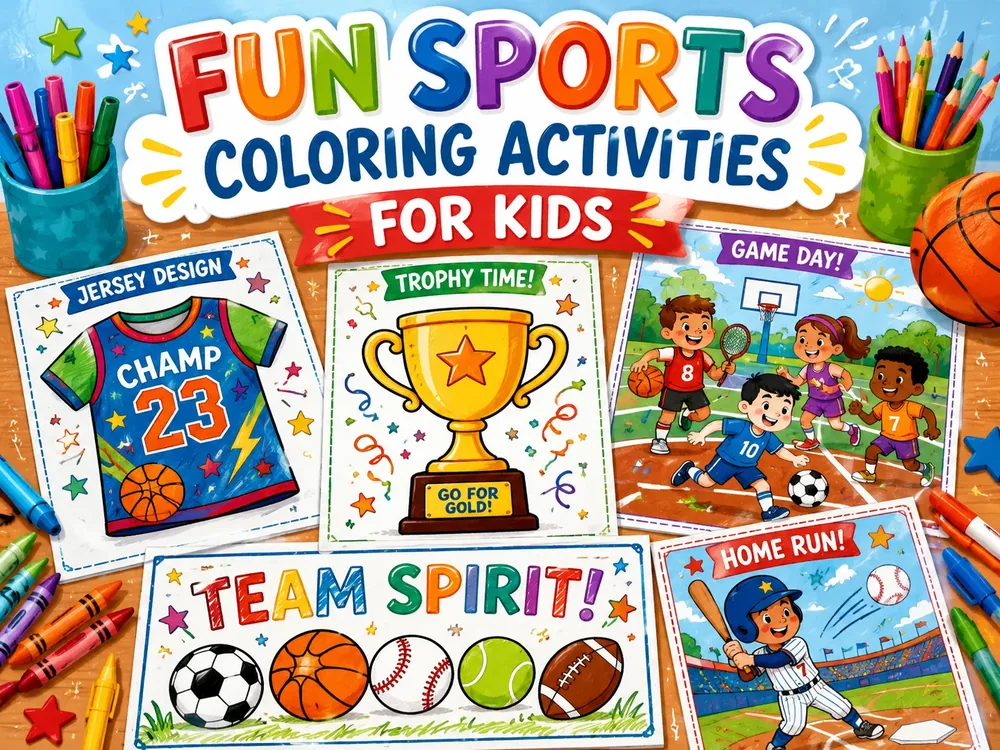
Sports coloring pages can become games, design projects, stories, or group activities with one simple addition. A child might invent a team, search a picture for sports equipment, create a player card, or turn a finished page into a party decoration.
These activities work at home, during playdates, at summer camp, or at a sports-themed party. Most require only printable pages and basic art supplies. Choose an idea that matches the child’s interests, the available time, and the amount of preparation you want to do.
Fun Starts With the Right Sports Page
The type of printable affects what children can do with it. A large picture of a ball or trophy suits a short activity, while a detailed game scene provides more space for observation, storytelling, and added drawings.
Look for a page that supports the planned activity:
- Blank jerseys work well for uniform design
- Trophies and medals can become fictional awards
- Game scenes support stories and detail hunts
- Pages with several objects work for I Spy activities
- Large single objects are easier for younger children
- Athletes in motion can inspire simple drawing or movement prompts
For younger children or quick projects, start with easy sports coloring pages that have clear outlines and limited background detail. They leave more time for adding a name, pattern, short story, or playful rule.
Personal interest matters as much as complexity. A child who enjoys swimming may prefer a pool scene, while another may choose basketball, gymnastics, baseball, or soccer. Young soccer fans can begin with soccer coloring pages featuring balls, goals, uniforms, and game scenes. Offering two or three choices gives children useful control without creating much extra work.
Available time should also guide the selection. A quick activity needs a simple image and one instruction. A team project with a jersey, mascot, player card, and poster may take several sessions.
Ten Fun Sports Coloring Activities
Each idea below adds a playful task beyond filling the picture with color. The activities can be simplified by offering fewer choices or expanded with writing, drawing, and discussion.
Choose Favorite or Invented Team Colors
Select a jersey, helmet, pennant, or group of players. Ask children to create a color palette and use it consistently across the page.
They can choose two favorite colors or invent a combination for a new team. Older children may add a third accent color and explain what each color represents. The finished page can later become part of a team poster or display.
Design a Brand-New Jersey
A blank jersey template gives children room to create a name, number, pattern, and trim. They might add stripes, stars, lightning bolts, geometric shapes, or a border around the sleeves.
Provide a few design options when children need a starting point. A more detailed version can include front and back views, home and away uniforms, or a short explanation of the design choices.
Create a Team Logo and Mascot
Ask children to invent a clear symbol for a made-up sports team. The logo might use initials, a ball, a simple shape, an animal, or a combination of two ideas.
A team called the Comets could use a moving star, while the River Otters might choose a playful animal mascot. Children can also add a team name or short motto. The goal is to create an original, recognizable symbol rather than copy professional branding.
Play Sports Equipment I Spy
Choose a busy sports scene and prepare a short list of items to find. Children might search for a helmet, net, ball, numbered jersey, pair of shoes, or object used for scoring.
A color code can make the search more interactive. For example, children might color equipment blue, clothing green, and field markings red. To make the activity more challenging, ask them to count the objects or group them by sport.
Pages with clearly recognizable rackets, balls, and court markings make tennis coloring pages especially useful for this type of equipment search.
Finish the Sports Scene
Use a page with open background space or an incomplete setting. Children can add spectators, a scoreboard, weather, field markings, signs, equipment, or a place where the activity is happening.
A skater might be placed on an outdoor rink, while a swimmer could be given lane ropes and cheering spectators. Children using hockey coloring pages might add boards, goal lines, a scoreboard, or fans around the rink. After coloring, ask the child to explain one added detail and why it belongs in the scene.
Make a Fictional Player Card
Turn a generic sports figure into a made-up player card. Children color the character and add a few details around the image.
A player card may include:
- Player name
- Jersey number
- Team name
- Favorite position
- Special skill
- Positive team value
The special skill can be realistic or imaginative. A player might be good at passing, encouraging teammates, staying calm, or making everyone laugh before a game. Several cards can be collected into a small team book.
Design a Trophy or Medal
A trophy or medal page can celebrate more than winning. Children can invent awards for teamwork, effort, kindness, imagination, persistence, or helping others.
Ask them to add an award title, decorate the ribbon or cup, and decide who might receive it. The finished picture can become a card, scrapbook page, party decoration, or positive message for a friend or family member.
Color and Tell a Sports Story
A sports scene already provides characters, action, and a setting. Children can use those elements to tell what happened before the picture, what is happening now, and what might happen next.
Helpful prompts include:
- What are the players trying to do?
- Is there a problem to solve?
- How can the characters help one another?
- What happens after the scene ends?
Younger children can tell the story aloud. Older children can write a paragraph, caption, comic strip, or short play-by-play description.
Build a Group Sports Poster
Give each child a different page or part of a shared theme. Combine the finished pictures into an invented sports festival, a wall of favorite activities, or a town where every area features a different game.
Children can work at a shared table or separate stations, depending on the space and their needs. Assigning different jobs also helps mixed-age groups. One child might design the title, another the background, and others the athletes, flags, tickets, or team signs.
A mixed-sports poster can include a baseball field, soccer goal, tennis court, hockey rink, and other settings. Baseball coloring pages can provide players, bats, gloves, balls, and field scenes for one section of the display.
Try a Color-and-Move Challenge
Pair a coloring task with a short, controlled movement that fits the available space. Children might march in place, reach upward like a basketball player, take gentle side steps, pretend to swim with slow arm movements, or hold a simple balance position.
Keep the movement brief and easy to supervise. It adds variety to the activity but does not turn coloring into exercise or sports practice.
Choose an Activity by Age and Time
Age ranges can help with planning, but they should remain flexible. A child’s interests, drawing confidence, reading ability, and comfort with detailed pictures may matter more than the number on a birthday cake.
The table offers practical starting points rather than developmental rules.
| Age and format | Suitable activities | Approximate time | Ways to adapt |
|---|---|---|---|
| Ages 4–6 | Color matching, simple I Spy, trophy design | 10–15 minutes | Use large outlines, fewer choices, and oral answers |
| Ages 7–8 | Jersey design, mascot creation, player card | 15–25 minutes | Add a name, number, symbol, or short explanation |
| Ages 9–10 | Finish the scene, sports story, group poster | 20–30 minutes | Add original details, rules, or a brief presentation |
| Mixed-age group | Mural, party station, team project | Flexible | Assign different roles and page difficulty levels |
Shorten an activity by limiting the number of decisions. Instead of designing an entire team, children might choose only the colors and logo. A longer version can include a jersey, mascot, player card, trophy, and group banner.
Make It Work for a Group or Party
Sports coloring activities can be straightforward to organize when the pages and supplies are prepared in advance. Give children some choice while keeping the setup simple.
Set out two or three page types rather than requiring everyone to color the same image. A useful selection might include a jersey, game scene, trophy, and player card. This allows children to choose between design, storytelling, observation, and simple coloring.
Group preparation may include:
- Placing crayons, markers, or pencils in shared containers
- Creating separate areas for blank and completed pages
- Providing a few simple instruction cards
- Leaving space for a collaborative poster
- Offering quieter individual work alongside the group activity
- Keeping movement challenges in a clear, supervised area
For a shared team project, children can agree on a name and two main colors. Each participant then creates a different item, such as a jersey, mascot, flag, trophy, or player card.
Avoid choosing a single “best” picture. A collaborative display or collection lets children contribute in different ways without comparing artistic ability.
Before printing copies for a group, check the page’s license or terms of use. Choose printables that clearly allow the type of personal, party, camp, or group use you have planned.
Use the Finished Pages in New Ways
Completed pages can become decorations, storytelling tools, keepsakes, or parts of another game. Deciding how the picture will be used gives children an additional reason to finish the project.
Possible uses include:
- Hang jerseys or pennants as party decorations
- Turn a trophy page into an encouragement card
- Staple player cards into a fictional team book
- Use game scenes as storytelling prompts
- Build a paper garland from medals and sports equipment
- Exchange fictional player cards with friends
- Add favorite pages to a scrapbook
- Create a rotating display for different sports
Some projects require cutting, tape, string, or additional decorations. Choose materials that suit the children’s ages, follow product labels, and provide adult help when cutting is part of the activity.
Keep Coloring and Movement in Balance
Sports coloring is a creative seated activity, not a replacement for active play, outdoor time, or sports practice. A short movement prompt can add variety, but it should be treated as a transition rather than a full physical activity session.
Current CDC guidance says children ages 3–5 should be active throughout the day. Children and adolescents ages 6–17 should receive at least 60 minutes of physical activity each day.
A finished page can still encourage a later activity. A child who colors a soccer scene might practice gentle footwork outside. A basketball jersey project could be followed by shooting at a hoop, while a swimming page might inspire interest in a future pool visit.
The connection does not need to happen immediately. Coloring can provide a quiet creative activity while helping children explore sports they already enjoy or might like to try.
Pick One Page and Add One Twist
Start with one printable, add one playful rule, and decide how the finished picture will be used.
A blank jersey can become a new team uniform. A busy game scene can become an I Spy challenge. A trophy can turn into an encouragement card. A sports figure can become a fictional player card.
The page supplies the theme. The added twist gives children something new to invent, discover, or share.
Frequently Asked Questions
What are some fun sports coloring activities for kids?
Kids can design jerseys, invent team logos, create fictional player cards, search pictures for sports equipment, complete game scenes, decorate trophies, tell sports stories, or combine several pages into a group poster.
How can I make a sports coloring page more interactive?
Add one extra task to the page. Children can follow a color code, find specific objects, draw a background, invent a player name, explain their design choices, or tell what happens before and after the pictured scene.
Which sports coloring pages are best for younger children?
Pages with large outlines, recognizable objects, and limited background detail are usually easier to use. These easy sports coloring pages can also be paired with simple matching, counting, or color-choice activities.
Can sports coloring activities work for a group or party?
Yes. Prepare several page types, place art supplies in shared containers, and let children choose between jersey designs, trophies, player cards, and game scenes. Finished pages can be combined into a banner, fictional team collection, or group sports poster.
Can sports coloring activities include movement?
A short movement prompt can be added when there is enough safe space. Children might march in place, reach upward, take gentle side steps, imitate slow swimming movements, or hold a simple balance position. These prompts add variety but do not replace active play or sports practice.